 Top Trending
One Soft Chew a Day With Three Lines on the Panel: Beet Powder, a Grape Polyphenol and Coffee Fruit. Three Studies of Three Sizes, What Each One Measured, and Why the Only Focus Result Among Them Came at a Higher Dose
SuperBeets Focus + Clarity is a blueberry-pomegranate soft chew from HumanN, a Texas company, sold by GNC at forty dollars for a bag of thirty: 300 milligrams of beet root powder, 150 of a grape-derived resveratrol and 100 of coffee fruit extract, with two grams of sugar to make it a chew. I read each of the three lines beside the study behind it, found that one measured a protein in the blood, one measured blood flow on a scan and only one measured focus, in overweight people, at a dose the chew doesn't reach, and then read GNC's return page, the most generous on any page I've written, and its review widget, the most honest about its one-star reviews.

This is a paid advertisement. Sponsored by GNC Holdings, LLC (seller); Human Power of N (HumanN), maker.

Arthur Penrose is the pen name of this desk.
The customers quoted on this page are real; their reviews are public on the seller's product page, where the seller's review system notes that they were originally posted on the maker's site, and were read there on September 9, 2026.
They carry no confirmed-purchase mark and this page doesn't give them one.
I haven't met them and know nothing about them beyond what they wrote.
The small photos beside their reviews are illustrations, not the reviewers.
Everything about the chew, from the three lines on the panel to the return terms, comes from the seller's own pages, read the same day.
I like a short panel, and I like a company that prints its return policy in a sentence a man can hold in his head, and this bag has both.
Three lines: beet root powder, a grape polyphenol with a trademark, and coffee fruit extract.
Each one has a study behind it, and that's where a page like this usually stops reading, because the front of the bag says its lines have been studied, and it's true.
What the front doesn't say is what each study measured.
One measured a protein in the blood over two hours.
One measured blood flow on a scans after a day of beet juice.
Only one measured focus, over six months, in overweight people, at a dose the chew doesn't reach.
So that's what this page is.
Three lines, three studies, what each one measured, two grams of sugar, a bag that lasts a month, and a seller whose return page takes back used product.
One soft chew a day, first thing or with the coffee. Every number on this page is for that chew.
Here's what the bag is.
SuperBeets Focus + Clarity, made for Human Power of N, which trades as HumanN, a company in Austin, Texas, and sold here by GNC, the vitamin chain, from its website and its stores.
A dark-red resealable bag of thirty soft chews, blueberry-pomegranate flavor, one a day.
The panel, in the seller's order: beet root powder, 300 milligrams; Verti-te resveratrol, 150 milligrams; coffee fruit extract, 100 milligrams.
Then the chew itself: tapioca syrup, cane sugar, rice bran, flavorings, sunflower lecithin and oil, malic and citric acid, glycerin, and a stevia extract.
Twenty calories.
Four grams of carbohydrate.
Two grams of added sugar.
I did what I always do.
I read the label before the listing.
I read the study behind each line, at the dose and in the form it actually used, and I wrote down what the study measured, because that's the whole page.
I read GNC's return page and its shipping page.
And I read the review widget, which prints the star breakdown for all 355 ratings, one-star reviews included, which most widgets don't.
What I found is a well-made chew from a big company sold by a bigger one, three real lines with three real studies, none of which measured focus at this dose, two grams of sugar, and the easiest return in this category.
One more thing before the first line, because most of you got here from one of our own advertisements.
Those ads talk about a boxed cereal, three foods, three drinks, and three words or phrases a man is supposed to be able to say.
None of that is in the chew, and I won't pretend it is.
It's on this page, in its place: the cereal, the drinks and the word test are the seventh line, and the honest version of every headline we run is in the guide linked at the foot.
Line one · The bagA Dark-Red Pouch, Thirty Soft Chews, and a Panel With Three Lines
This is what's on the counter.
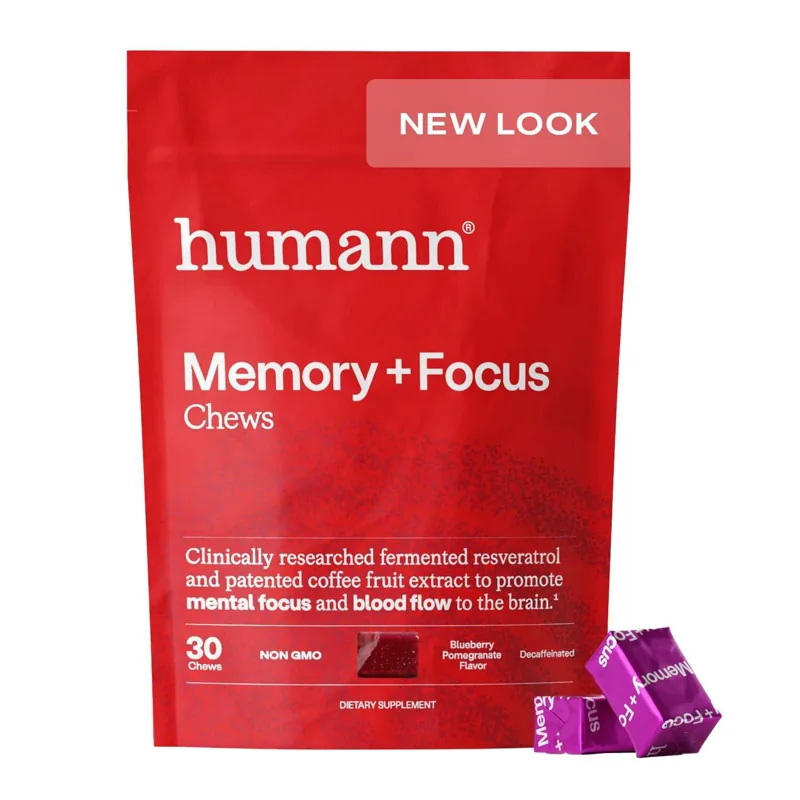
A dark-red stand-up pouch with a zip seal, about the size of a paperback, and inside it thirty square chews, each individually wrapped, the color of a beet and the texture of a soft caramel.
The front says SuperBeets, Focus + Clarity, Blueberry Pomegranate, and 30 Chews.
The panel, from GNC's ingredients tab, per chew:
Beet root powder, 300 milligrams.
Verti-te resveratrol, 150 milligrams.
Coffee, Coffea arabica, fruit extract, 100 milligrams.
Other ingredients: tapioca syrup, raw cane sugar, rice bran, flavorings, sunflower lecithin, sunflower oil, malic acid, glycerin, citric acid, rebiana, which is a stevia extract.
Calories, 20.
Total carbohydrate, 4 grams.
Total sugars, 2 grams, all of them added.
The directions, from the same tab: as a dietary supplement, take one chew daily; intended for adults.
GNC's highlights call it without gluten, without dairy, vegan and non-GMO.
One chew, three lines, and a taste that most of the reviews mention before anything else.
It's a candy-shaped supplement, and it knows it.
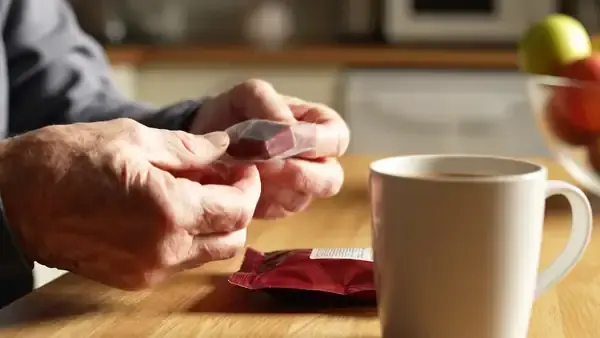
Line two · Coffee fruitOne Hundred Milligrams, the Exact Dose of a Study, and What That Study Measured
The smallest line, the one that matches its study best, and the reason to read what a study measured before you read what it found.
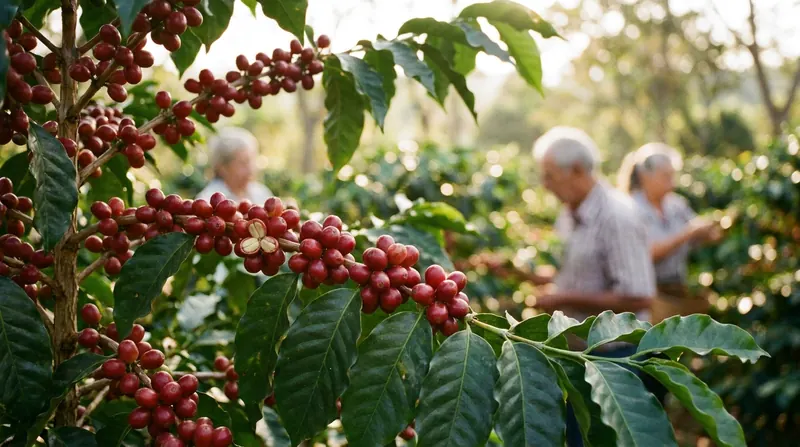
Coffee fruit is the red cherry the coffee bean grows inside, which farmers used to throw away and now dry and extract.
The study behind it gave healthy adults, ten per group, a single 100-milligram dose of a whole coffee fruit concentrate, or green coffee caffeine, or grape seed extract, and measured a growth protein in their blood over the next two hours.
The coffee fruit group's level rose about 143 percent from where it started, against about 31 percent for the other two. [1]
One hundred milligrams.
The exact dose in the chew.
And what it measured was a protein in the blood, for two hours, in ten people.
Nobody in that study was asked to remember anything.
A blood marker that rises for two hours is a real finding and a small one, and the front of the bag is built on it.
Coffee fruit at 100 milligrams matches its study's dose exactly, and its study measured a protein in ten people's blood for two hours, not focus. It's the line the marketing leans on and the line with the least to lean on.
Line three · ResveratrolOne Hundred and Fifty Milligrams, and the Only Focus Result on the Panel, at Two Hundred, in Overweight People
The line with the best study, and the arithmetic that keeps it honest.
Resveratrol is the polyphenol in grape skins that gave red wine its reputation in the 1990s, and here it's a branded grape-derived form at 150 milligrams.
The study worth reading gave 46 healthy but overweight adults aged 50 to 75 either 200 milligrams of resveratrol a day or a placebo for 26 weeks, and tested their focus and scanned their minds at the start and at the end.
The resveratrol group held onto a list of words better over 30 minutes, showed higher connectivity in key regions on the scan, and had lower long-term glucose and less body fat. [2]
That's a real focus result, over six months, in people my age.
Two things keep it in proportion.
It was 46 people, all overweight, and the result was one focus measure among several.
And it was 200 milligrams a day.
The chew holds 150.
Three quarters of the dose of the one study on this panel that measured focus, in a bag sold to everyone, from a study of people who were carrying extra weight.
Close, and not the same.
Resveratrol at 150 milligrams is the best line on the panel: a six-month focus result in people over 50, at 200 milligrams, in 46 overweight adults. The chew gets three quarters of the way there.

Line four · Beet rootThree Hundred Milligrams of Powder, and a Study That Fed Older Adults a Day of Beet Juice
The line the brand is named for, and the biggest gap between the study and the chew.
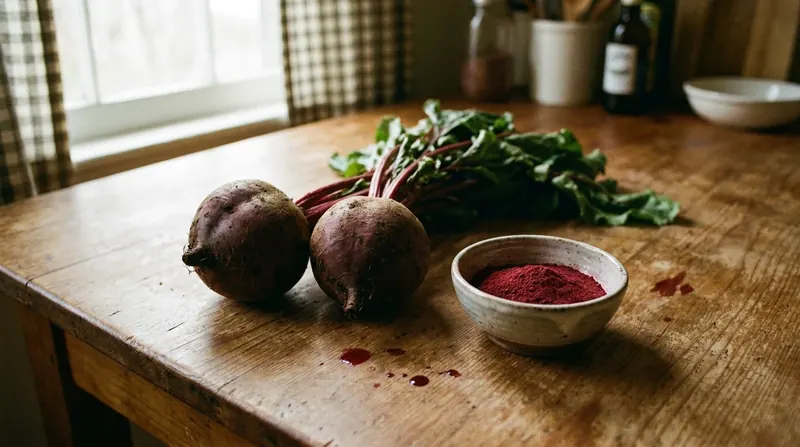
Beet root is rich in dietary nitrate, which the body turns into nitric oxide, the body's own widener of blood vessels, and that's the whole reason beets became a supplement.
The study behind this line gave older adults, average age about 75, a day of a high-nitrate diet that included beet juice, and a day of a low-nitrate diet, and scanned their minds for blood flow.
The high-nitrate day didn't change overall blood flow to the mind, but it did raise blood flow in one region, the frontal white matter. [3]
That's blood flow, on a scan, after a day of nitrate-rich food and juice.
A glass of beet juice holds many times the nitrate of 300 milligrams of powder, which is about a tenth of a teaspoon.
Nobody in that study was tested on focus, and nobody in it ate a chew.
The beet line is a real vegetable at a small dose, and its study is about plumbing, not focus.
Beet root at 300 milligrams: a day of beet juice moved regional blood flow on a scan in older adults. A tenth of a teaspoon of powder isn't a glass of juice, and blood flow isn't focus.
Count the lines whose study measured focus at the chew's own dose, and you get none. One measured blood, one measured blood flow, and the one that measured focus did it at a higher dose in heavier people.
Line five · The sugarTwo Grams a Chew, and the Reason It's a Chew
The line that isn't an ingredient, and still belongs on the page.
Two grams of added sugar per chew, from tapioca syrup and cane sugar, printed on the panel, with a stevia extract to finish the job.
That's less than half a teaspoon, and it's why the thing tastes like a soft candy and why the reviews mention the taste first.
Thirty chews is sixty grams over the bag, which is about fifteen teaspoons across a month, or half a can of soda's worth spread thin.
Two grams is a small number and a real one.
A man counting his sugar should count it; a man who isn't shouldn't worry about it.
Two grams of sugar per chew is the price of the format. It's on the label, and it's the reason a capsule would have been cheaper.

Line six · The reviewsThree Hundred and Fifty-Five Ratings, an Average of Four, and a Widget That Prints Its One-Star Share
GNC's page carries a review widget with 355 ratings and an average of four stars, and it prints the breakdown: 53 percent five stars, 14 percent four, 21 percent three, 5 percent two, and 8 percent one.
That's more honest than most widgets, and it's worth reading: a fifth of the people who rated this chew gave it three stars, and one in twelve gave it one.
The reviews themselves, the widget notes, were originally posted on the maker's own site, and they carry no confirmed-purchase mark from GNC.
So this page marks them as what they are: real reviews published on the seller's page, not confirmed purchases.
I read the ten most recent, all posted on the maker's site, and kept six, including one at four stars.
I threw out one that uses a phrase this page won't use, one that promises energy in general, one written about a husband, and one about a family business with nothing else in it.
These are real customers, quoted word for word from the seller's product page; the small photos beside them are illustrations, not the reviewers.

I am 85 years old I play cards I can figure my score without help I do fillin puzzles and Word Search every day This has helped me so much I am Blessed.

I noticed a difference in a few weeks. I was thinking more clearly and came up with solutions to situations more easily. The difference is very subtle, but if one is in tune with their body and mind, I think you'll notice improvement. I'm in my 70's.

Still early but finding words a bit sooner than the previous few years.

i have autoship on this, take 2 a day & tastes so good, as the name says, it really helps my focus esp focus since am now 71, thank you for this great product!

Their tasty and I love that you can grab and eat on your way to work.
Read those the way I did.
Marcy is 85, plays cards and does the word search every day, and credits the chew.
The cards and the puzzles are the best-supported thing in her review, and she's doing them anyway.
Sabrina, in her seventies, says the difference is very subtle and you'd have to be in tune with yourself to notice.
That's the most honest sentence on the page.
Margie says it's early and words come a bit sooner.
Irma is 71, takes two a day, which is twice the label's direction, and likes the taste.
Ms. R.
G., at four stars, likes that she can grab one on the way to work, which is a review of the format, and the format earns it.
Nobody I kept describes a trial result, because the trials didn't measure one at this dose.
They describe puzzles, subtlety, words arriving a little sooner, and a taste.
And 8 percent of the 355 gave it one star, which the seller's widget is honest enough to print and this page is honest enough to repeat.
Line seven · The bowl and the cupThe Cereal, the Three Drinks, the Three Foods and the Word Test From Our Own Advertisements
Our advertisements have been saying, in one version or another, that a boxed cereal, three foods and three drinks have something to do with focus, and that there are three words or phrases a man ought to be able to say.
You're owed the honest version, on one line, so here it is.
Start with the bowl.
A frosted, honey-coated or chocolate cereal is mostly refined starch and added sugar, and a serving can carry more sugar than a cookie.
No cereal "ages the mind faster than time."
Nobody has measured any such thing, and that phrase was written to be clicked.
What the studies do say is duller, and worth more.
In the Framingham Heart Study, adults who drank more sugary beverages scored lower on tests of focus, and daily fruit juice went the same way. [4]
In a Brazilian study of 10,775 adults followed for eight years, the ones who ate the most ultra-processed food, and the sweet cereal shelf is part of that, lost ground on tests of thinking about a quarter faster than the ones who ate the least. [5]
Both are associations across a population, not a sentence on your bowl.
And a quarter faster than slow is still slow.
This chew has two grams of added sugar, which I mention because the Framingham line is about sugar, and the chew is a small piece of it.
Two grams is a fifth of a cookie.
It's still on the label.
The three drinks.
The "evening drink" in our advertisement is alcohol, and it's the one with the strongest case behind it: in 550 British civil servants followed for thirty years, the more a person drank, the faster their scores fell on a word-fluency test, and light drinkers had no edge over those who didn't drink at all. [6]
The second is sugar in a glass: soda, sweetened tea, the tall flavored coffee from the counter, which is a soft drink with coffee in it.
The Framingham finding above is about sugary drinks, and those are sugary drinks. [4]
The third, in one of our headlines, was coffee.
That was our worst headline.
Plain black coffee and plain tea aren't the drinks any of those studies were about.
Keep your coffee.
The chew's coffee fruit has no meaningful caffeine, and the chew doesn't change how much you're drinking.
The three foods.
Processed meat, fried food, and the white-flour shelf: pastries, packaged cakes, white bread.
Our advertisement says "just stop eating these three."
The research says something slower.
In 960 older adults followed for nearly five years, the ones whose meals looked most like the MIND pattern, vegetables, berries, nuts, whole grains, beans, fish and olive oil, held their thinking scores better, and the gap between the top and bottom thirds worked out to about seven and a half years of age. [7]
That's a pattern over years, not a list of three, and it can't be sold in a headline.
Which is exactly why our headline doesn't say it.
Beets are a vegetable on that list, and a roasted beet at supper carries more of everything than a tenth of a teaspoon of its powder.
Less sugar in the bowl and the glass.
Less alcohol in the evening.
Keep the coffee.
Eat more like the Mediterranean shelf and less like the vending machine.
Every one of those costs nothing, and none of them is in the chew.
The three words, or the three phrases.
There's no such list.
What our advertisement borrowed from is the short, scored mental-status test clinicians have given at the bedside since the 1970s: the date and the place, a few words to hold in mind and give back a minute later, a sum, naming, repeating one sentence, copying a drawing.
It's given in person and read against your age and your schooling by someone trained to do it, and a low score is a reason for a proper look, not a verdict.
Stumbling on a word when you're tired or being timed means nothing on its own.
Nothing begins at a word.
If the worry behind the click is real, that's fifteen minutes with your own clinician, and it costs you nothing from me.
And the advertisement about the things some men take every day.
That one sits closest to real research, and it's the one an advertisement has no business acting on.
Some kinds of daily medicine, including a few sold over the counter for allergies and for the night, are on the lists pharmacists check for people over 65.
Don't stop or change any of it because of an advertisement, ours included. Put everything you take in one bag, this pouch included, take it to the pharmacist, and ask one question: is anything here a poor choice at my age?
Beet nitrate is worth naming if you take anything for the heart or circulation, and resveratrol if you take anything that affects clotting.
The guide at the foot of this page has that section written out, with the studies.
So if you clicked on the cereal, here's where the cereal went: onto the counter next to a pouch that has nothing to do with it, where the real answer was always a plainer bowl and a roasted beet at supper.
Line eight · What it isn'tSix Things a Chew Won't Do
- It won't give you a focus result at its own dose. The only focus study on the panel used 200 milligrams of resveratrol; the chew has 150.
- It won't give you a glass of beet juice. Three hundred milligrams of powder is a tenth of a teaspoon, and the beet study fed people a day of juice and measured blood flow.
- It won't do what the coffee fruit study did for longer than that study looked, which was two hours, in ten people, in their blood.
- It won't act on any condition a clinician has named. It's a dietary supplement, and its own panel carries the sentence that says so.
- It won't be without sugar. Two grams of added sugar per chew, printed.
- It won't ship at no charge on its own. A single bag is below GNC's free-shipping line, and standard shipping is a flat charge.
If that list annoys you, I'd rather you were annoyed now than when the bag is empty and you're paying shipping on the second one.
Line nine · The routineIf You Do Buy It: One Bag, One Chew With the Coffee, Thirty Days, One Notebook
If you're going to spend the money, spend it as a test with a date on it, and use the seller's return page as the safety net it is.
- Buy one bag from GNC, not a subscription. Thirty chews is a month, and GNC's thirty-day window covers a bag you've opened.
- One chew with the morning coffee, every day, at the label's dose. Irma takes two; the label says one, and the trials didn't test two.
- Keep the coffee exactly as it was. The chew adds no caffeine worth counting, so nothing about your morning should change but the chew.
- Write one line a day in a notebook. Not "sharper" or "foggier." What you were doing at ten, and how it went.
- Take the pouch to the pharmacist before day one if you take anything for the heart or circulation or anything that affects clotting. Beet nitrate and resveratrol are worth a minute at the counter.
- On day thirty, read the thirty lines. If they read better than the month before, you've found a forty-dollar habit. If they don't, GNC's return page takes back a used bag within thirty days of the order, minus shipping.
Look at that list the way I do.
Four of the six things cost nothing.
The bag is the one you'll pay for, and the notebook and the return page are the ones that will protect you.

Line ten · Who it's forWho It Suits, and Who It Doesn't
This is worth a look if:
- You want three real lines in a chew you'll actually take, and you've now read what each of the three studies measured.
- You'd rather chew something than swallow a capsule, and two grams of sugar a day doesn't trouble you.
- You want a seller with a street address in Pittsburgh, a toll-free number, stores you can walk into, and a return page that takes back used product. You have all four now.
- You can hold two ideas at once: three studied ingredients, no focus result at this dose.
- You'll buy one bag, take one chew a day, and run thirty days with a notebook and the return window open.
Give it a miss if:
- You want the resveratrol of the study. That's 200 milligrams; the chew is 150.
- You're counting sugar closely. Two grams a chew, sixty a bag.
- You want something that acts on a condition a clinician has named. This is a dietary supplement.
- You take anything for the heart or circulation or anything that affects clotting and haven't asked a pharmacist. Ask first.
- You want shipping at no charge on one bag. It's below GNC's line.
Line eleven · Where it's soldMade for a Texas Company, Sold by GNC From Pittsburgh, With a Return That Takes Back Used Product
The chew is sold by GNC on its own website, and that's the only place this page links to.

The two companies are easy to find.
The chew is made for Human Power of N, trading as HumanN, with its office on Capital of Texas Highway in Austin, printed in GNC's licensing tab.
The seller is GNC Holdings, LLC, with its customer-service address on Hopper Place in Pittsburgh, a toll-free number that answers seven days a week, and an email, all printed on its contact and privacy pages.
GNC's listing marks the chew without gluten, without dairy, vegan and non-GMO.
The current price is shown on its page, not here.
The day I read it, a bag of thirty had a list price of about what a tank of gas costs, with a percentage off applied in the cart under a promotional banner, and it wasn't eligible for the seller's subscription discount.
Buy one bag.
Thirty chews is a test, and the return window is thirty days from the order.
A second bag before the first is finished is a bet.
Now the two things that matter more than the price.
First, shipping.
GNC ships to all fifty states; standard shipping is a flat charge of about thirteen dollars, at no charge above the seller's order line, and one bag is below that line.
You can also have it sent to a GNC store for pickup.
Second, the return policy.
Read this twice, because it's better than most.
If you're not satisfied, you can return the item within thirty days of the order date for a refund of the purchase price, minus shipping and other charges, and GNC says the item can be used or unused, in good condition, in its original packaging where possible, with the paperwork.
Nothing after thirty days.
It's a real refund with a real address, and it takes back a bag you've opened.
I'd still rather call it a thirty-day return than a refund with no strings, because the shipping doesn't come back with it.
Everything in a chew
| Ingredient | Amount per serving |
|---|---|
| Beet root (Beta vulgaris) powder | 300 mg |
| Verti-te™ resveratrol, grape-derived | 150 mg |
| Coffee (Coffea arabica) fruit extract | 100 mg |
| Other ingredients: tapioca syrup, raw cane sugar, rice bran, flavorings, sunflower lecithin, sunflower oil, malic acid, glycerin, citric acid, stevia extract | — |
Full details on each ingredient are in the guide linked at the bottom of this page.
The ingredient and advertising guide linked at the foot of this page goes through every one of the three lines and the sugar.
What each ingredient is.
What the research does and doesn't show, at what dose, and what each study measured.
What to be careful about, beet nitrate and resveratrol first if you take anything daily.
And which of our own headlines it does and doesn't support.
Print it and take it to the pharmacist if you take anything daily.
It's written for that.
See the current price on the seller's site
One soft blueberry-pomegranate chew a day of beet powder, a grape polyphenol and coffee fruit, made for a Texas company and sold by GNC.
CHECK AVAILABILITYMade for Human Power of N (HumanN), Austin, Texas, and sold by GNC Holdings, LLC, Pittsburgh · Standard shipping is a flat charge; at no charge above GNC's order line, which one bag is below; store pickup available · GNC 30-day return, used or unused, refund of the purchase price minus shipping
QuestionsWhat Readers Ask Me Before Their First Bag
Questions readers ask
Is this medicine?
No. It's a dietary supplement, three ingredients in a soft chew with two grams of sugar, made for a company in Texas and sold by GNC.
The panel carries the standard sentence every American supplement carries, the one that says the FDA hasn't evaluated its claims.
Does it have caffeine?
The coffee fruit extract comes from the cherry around the bean, not the bean, and the panel lists no caffeine. Count your coffee as usual.
Which of the three lines actually does something?
None has a focus result at the chew's dose. The coffee fruit study measured a blood protein for two hours in ten people, at this exact dose.
The beet study measured blood flow on a scan after a day of beet juice. The resveratrol study measured focus over six months in 46 overweight adults, at 200 milligrams; the chew has 150.
It's all on this page, line by line.
What does it taste like?
Blueberry and pomegranate over a soft caramel texture, with beet underneath; the reviews mostly like it, and the format is the reason most of them bought it.
Will it help my focus?
I can't tell you that, and you should be wary of any page that does. The only focus study on the panel used a higher dose in heavier people.
What the customers I kept describe is puzzles, subtlety, words arriving a little sooner, and a taste, and 8 percent of 355 ratings gave it one star.
Can I take it alongside what I already take?
Ask your clinician or pharmacist and take the ingredient guide with you. Beet nitrate is worth naming if you take anything for the heart or circulation, and resveratrol if you take anything that affects clotting.
Two minutes at the pharmacy counter answers it.
Are the reviews confirmed purchases?
No, and this page doesn't mark them as such. GNC's widget notes they were originally posted on the maker's site.
They're real and public, quoted word for word, and the widget prints its full star breakdown, one-star reviews included.
Does it ship to me?
To all fifty states, for a flat standard charge; at no charge above GNC's order line, which one bag doesn't reach; or to a GNC store for pickup.
What if it arrives and I don't like it?
Return it to GNC within thirty days of the order date, used or unused, for a refund of the purchase price minus shipping. Nothing after thirty days.
Your advertisement was about a cereal, or three foods, or three drinks. Where is that on this page?
On line seven, in full, with the studies. The short version: less sugar in the bowl and the glass, less alcohol in the evening, keep your plain coffee, and eat more like the Mediterranean shelf, beets included.
None of it is in the chew, and the ingredient and advertising guide at the foot goes through every headline we run and says which ones overstate.
Your advertisement said something about three phrases, or spelling three words. Is there a test I can take?
Not on a screen. The words and phrases come from the short mental-status test clinicians give in person, and it's read against your age and schooling by someone trained to do it.
Nothing begins at a word. If the worry behind the click is real, ask your clinician for the proper test.
It's fifteen minutes.
The short versionEverything Above, in Sixty Seconds
- A bag of thirty blueberry-pomegranate soft chews made for HumanN of Austin, Texas, and sold by GNC: beet root powder 300 milligrams, a grape-derived resveratrol 150 milligrams and coffee fruit extract 100 milligrams per chew, with two grams of added sugar and twenty calories. One a day.
- Coffee fruit: its study measured a blood protein for two hours in ten people, at this dose. [1] Resveratrol: a six-month focus result in 46 overweight adults aged 50 to 75, at 200 milligrams. [2] Beet root: a day of beet juice moved regional blood flow on a scan in older adults; no focus measure. [3]
- Three hundred and fifty-five ratings, average 4.0, 8 percent one-star, printed by the seller's own widget; the reviews are syndicated from the maker and carry no purchase mark. The five I kept say "85 years old," "very subtle," "finding words a bit sooner," "take 2 a day," and "tasty."
- Ships to all fifty states for a flat charge or at no charge above GNC's line; thirty-day return, used or unused, minus shipping.
- The cereal, three drinks, three foods and the word test from our own advertisements, on line seven: less sugar, less alcohol, keep the coffee, more like the Mediterranean shelf, and no test on a screen. None of it is in the chew.
- The honest use: one bag, one chew with the coffee for thirty days, a notebook, and the return window open.

The last lineWhat a Soft Chew Is Actually Worth
Here's the whole thing in one breath.
Three real lines in a well-made chew from a big company, sold by a bigger one with a street address and stores.
Three real studies, one of blood, one of blood flow, one of focus at a dose the chew doesn't reach.
Two grams of sugar, a taste most people like, and one in twelve who gave it a single star.
And a return page that takes back a bag you've opened.
If you're a man who wants three studied ingredients in a chew he'll actually take with his coffee, tested honestly over thirty days with the return window open, that's worth one bag.
Not because of the front of the bag.
Because you'll know exactly what each study measured, and exactly what it didn't.
Buy one bag from GNC, take one chew with the coffee, and write one line a day for thirty days. The notebook is a better judge than I am, and the return page is a better safety net than most.
Check the current price and availability
One soft blueberry-pomegranate chew a day of beet powder, a grape polyphenol and coffee fruit, made for a Texas company and sold by GNC.
CHECK AVAILABILITYMade for Human Power of N (HumanN), Austin, Texas, and sold by GNC Holdings, LLC, Pittsburgh · Standard shipping is a flat charge; at no charge above GNC's order line, which one bag is below; store pickup available · GNC 30-day return, used or unused, refund of the purchase price minus shipping
P.S. If you take one thing from this page, take the two numbers.
One hundred and fifty milligrams of resveratrol, three quarters of the one focus study.
Two hours, the length of the coffee fruit study that the front of the bag is built on.
Everything else about this chew sits between those two.
P.P.S. If the afternoon fog has been with you for a year, and it's there before the coffee too, talk to your own clinician before you buy anything.
A chew with the morning coffee is a small habit.
It was never going to answer a question a clinician answers in fifteen minutes and a blood test.
P.P.P.S. And if you do order it, keep the notebook, and keep the receipt.
When the bag is empty, you'll have thirty lines about your own mornings, and GNC's thirty days to decide, and both are worth more than the bag, whichever way the lines turn out.